
Last updated November 22, 2026
 Sweep & inspection
 Caps & crowns
 Flue relining
 Masonry repair
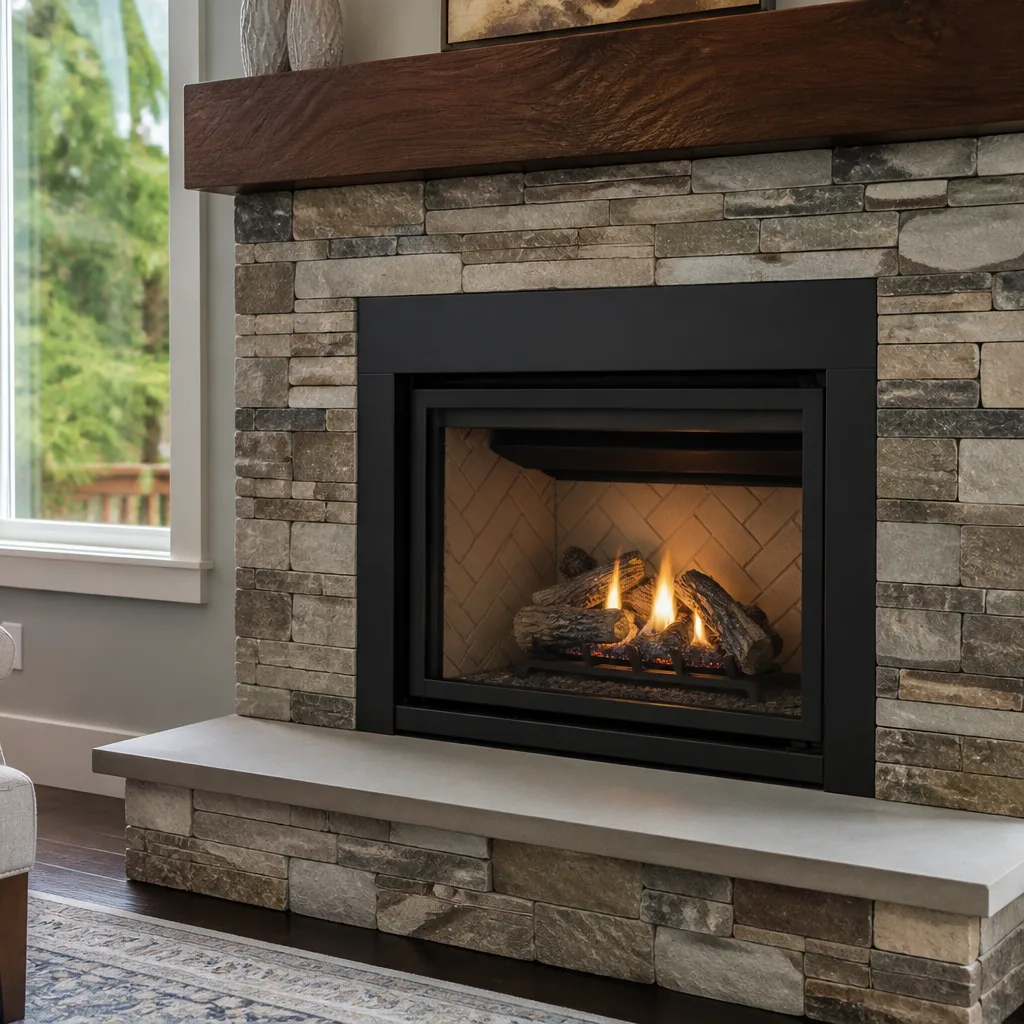 Gas fireplace service
Level 1 sweep and inspection to the NFPA 211 annual standard - flue, crown, cap, and flashing checked and photographed
Chimney sweep logs do not sweep chimneys. They loosen some creosote - which then falls where a brush and vacuum still have to collect it.
Chimney Cleaning Emergency Preparedness Guide for East Flatbush Homes
Most chimney emergency advice treats the chimney as a standalone appliance. In East Flatbush, it isn’t. Rowhouses here share party walls, which means a flue fire that starts in your chimney can travel into an adjacent structure through shared masonry in a matter of minutes. That changes the response protocol in ways generic home-safety guides never address. Waiting to see if a chimney fire burns itself out is not a reasonable option, and neither is assuming a quiet flue is a safe one. This guide walks through what an active chimney fire actually looks and sounds like, how to tell a slow-burning flue fire from a harmless one, what to do in the first sixty seconds, how carbon monoxide incidents differ from fire incidents, and what has to happen before the chimney can safely be used again.
Quick Answer
If you suspect a chimney fire in East Flatbush, evacuate everyone from the building, call 911, and do not pour water into the firebox. After the fire is out, the chimney cannot be used again until a Level 2 inspection confirms the liner and structure are sound. For carbon monoxide alarms triggered by a gas-appliance flue, get everyone outside, call Con Edison for the gas side, then book a chimney inspection before relighting anything.
Styles & brands we work with
- Sweep & inspection
- Caps & crowns
- Flue relining
- Masonry repair
- Gas fireplace service
Table of Contents
- How Do You Identify an Active Chimney Fire?
- What to Do in the First Sixty Seconds of a Chimney Fire
- The Slow-Burn Chimney Fire You Can’t See
- Carbon Monoxide Emergencies in East Flatbush Rowhouses
- Post-Fire Protocol: What Happens After the Trucks Leave
- Pre-Season Emergency Preparedness for East Flatbush Homes
- Documentation That Reduces Insurance Friction
- Typical Repair Scope After a Flue Fire
How Do You Identify an Active Chimney Fire?
An active chimney fire has a signature that most homeowners can recognize once they know what to listen for. The most reliable indicator is sound: a low roaring or rumbling noise from inside the flue that resembles a freight train or a distant jet. If you hear that noise coming from your chimney, assume fire until a professional proves otherwise.
What an active chimney fire typically looks and sounds like:
- Roaring or whooshing – a sustained low rumble inside the chimney, often audible from inside the house.
- Dense, dark smoke pouring from the top of the chimney or from cracks in the masonry around it.
- Visible sparks or flames at the chimney cap, sometimes accompanied by a burning smell in the yard.
- Popping or crackling sounds within the flue, sometimes described as a low booming.
- Heat damage – warped or discolored chimney caps, cracked masonry, or a hot-to-the-touch chimney breast inside the house.
- Creosote flakes raining down onto the roof or yard, which is a sign the liner is shedding burning deposits.
In East Flatbush rowhouses, the visual check needs to extend past your own roof. Look at the neighboring roofline. If your chimney is showing sparks or dark smoke, the party wall between your building and the adjacent structure may already be absorbing heat. That is not a reason to panic; it’s a reason to call 911 and get everyone out while the situation is still on your side of the wall.
Fire extinguishers have limited use on a chimney fire. A standard dry-chemical extinguisher will not reach a flue fire from the firebox, and the extinguisher dust it leaves behind is corrosive to the liner and masonry over time. Call 911 first. Proper extinguisher use is covered further down, but the point here is that an extinguisher is a supplement, not a substitute for calling the fire department.
What to Do in the First Sixty Seconds of a Chimney Fire
The first minute of a chimney fire is the one where small decisions matter most. The steps below are ordered by priority. In a real event, the reader should execute these in sequence without deliberation:
- Evacuate everyone. Get every person out of the building first. Nothing else happens before this.
- Call 911. State clearly that you have a chimney fire and give your address. Note the rowhouse configuration – that information helps the responding units.
- Close the damper, if you can reach it safely. A closed damper starves the fire of air, which slows it. The key phrase is if you can reach it safely: if the damper handle is hot or the firebox is smoking heavily, leave it.
- Close the firebox doors or glass front if your fireplace has them, again only if nearby and safe to do.
- Do not pour water into the firebox. This is the step homeowners most often get wrong. Water hitting a superheated firebox can crack the firebrick and the cast iron, and a burst of steam can push the fire up the flue.
- Do not close the chimney cap. A closed cap traps heat and pressure. The chimney needs to vent.
- Alert neighbors. In an East Flatbush rowhouse, the neighboring household needs to know immediately – not because your fire will necessarily spread, but because the party wall is shared and their own CO and smoke detectors should be checked.
A note on top-loading: if your fireplace has a top-loading door on the chimney breast, do not open it to throw anything in. It only feeds air to the fire. Leave all doors, hatches, and cleanout openings closed unless advised by the responding fire officer.
If you smell smoke in the house and see no fire, still evacuate and still call 911. A flue fire can burn in the upper chimney with no visible signs at the firebox, and the smoke may be arriving through a wall cavity, not the flue.
The Slow-Burn Chimney Fire You Can’t See
Not every chimney fire announces itself. Creosote deposits in a flue can ignite and burn slowly for hours, consuming the liner from the inside without roaring, without visible flames from the top, and without the characteristic noise. Homeowners often discover this only after the next sweep – or after a subsequent fire behaves strangely because the liner has been compromised.
Signs that suggest a slow-burn flue fire has already happened:
- Warped or buckled liner sections – visible on camera inspection, hard to see from the top.
- Discolored or cracked masonry around the chimney exterior, especially at flue-tile joints.
- Flakes of creosote or a powdery residue on the roof after a fire that seemed “normal.”
- A burning smell that lingers inside the house for days after a fire, even when the fireplace is not in use.
- Draft problems that appear suddenly after a fire that burned hot or long.
This is the reason an annual inspection is not just a decorative ritual. A camera inspection shows the inside face of the liner; a routine annual sweep with a photo report is the only reliable way to know whether a prior fire damaged your flue without a 911 call attached to it. In a rowhouse in East Flatbush, that matters for your neighbors as much as for your own household.
If you have already had a fire this season – even a small one that seemed to burn out in a few minutes – book an inspection before you burn again. The chimney sweep is not just about cleaning; it’s the inspection that catches hidden damage before it becomes an emergency.
Carbon Monoxide Emergencies in East Flatbush Rowhouses
Carbon monoxide incidents from chimney problems follow a different pattern from chimney fires. A fire gives you sound and smoke; carbon monoxide gives you a headache, confusion, and silence. The two events require different responses, and knowing which you’re dealing with saves time.
Carbon monoxide is produced by incomplete combustion. In an East Flatbush rowhouse, a blocked or partially blocked flue can cause CO to back-draft into living space even when the fire is burning correctly in the firebox. Gas appliance flues are particularly prone to this, because the exhaust is invisible and a partially collapsed flue liner or a bird nest above the cap can restrict flow without visible smoke in the house.
Patterns that suggest a CO event rather than a fire:
- Headache, dizziness, or nausea in one or more members of the household, often easing when they leave the building and returning when they come back.
- Confusion or drowsiness that doesn’t match the situation – common early CO symptoms that are easy to attribute to fatigue.
- A CO alarm sounding with no visible fire and no burning smell.
- Soot or dark stains around the top of a gas or wood appliance, indicating backdraft.
- A yellow or orange gas flame instead of a sharp blue one.
- CO alarms sounding in an adjacent rowhouse unit with no obvious source, which can indicate a shared chimney problem.
What to do on a CO alarm or symptom pattern:
- Get everyone outside immediately. Do not try to find the leak first. CO displaces oxygen and confusion starts early.
- Call 911 from outside. Fire departments have meters that can identify CO levels in the building.
- If gas appliances are the suspected source, call Con Edison. Con Ed handles the gas supply side and can shut off the appliance safely. Call them from the street, not from inside.
- If wood or pellet is the source, or if the source is unclear, book a chimney inspection before relighting anything. The sweep can see what the gas company can’t – the inside of the flue.
- Do not relight any appliance until you have a written clearance from a professional.
CO Detector Placement in East Flatbush Rowhouses
Rowhouse construction means CO from one chimney can migrate through shared wall cavities. Standard detector rules apply – one on each floor of the home, one near each sleeping area, and one outside the boiler or furnace room – but rowhouse households should pay particular attention to detectors on the shared party-wall side of each floor. If a neighboring unit reports a CO issue, check your own alarms even if you have no fireplace in use.
Post-Fire Protocol: What Happens After the Trucks Leave
Once the fire is out, the fire department has left, and everyone is safe, the most common homeowner instinct is to clean up and relight the fire to prove the chimney still works. Do not. A chimney that has just experienced a flue fire is not safe to use until a Level 2 inspection has evaluated the liner, the flue joints, the masonry, and the cap. A Level 2 inspection includes a camera examination of the interior of the flue – the only way to see the liner condition after a fire.
Post-fire sequence, in order:
- Do not use the chimney. No “just a small test fire.” A compromised liner can release fire directly into the wall cavities, and in a rowhouse that means the party wall.
- Photograph everything you can. Smoke staining on the chimney breast, creosote on the roof, any visible damage to the crown, cap, or masonry. Take wide shots and close-ups, and keep the original files.
- Get the fire department’s incident number or report. Your insurer will usually want it. As for any record the responding officers can give you at the scene – once they leave, that documentation becomes harder to obtain.
- Book a Level 2 inspection before you talk to your insurer about repair costs. The inspection report is what anchors the insurance conversation. Without it, you’re guessing at the scope and your insurer may discount the claim.
- Notify your insurer once you have the inspection report in hand. Most policies want prompt notification; pairing the notification with the inspection documentation avoids the back-and-forth that can delay a claim.
- Coordinate repairs only after the inspection report is written. Any repair work done before the report is written can complicate the claim and can mask what actually happened.
In our experience, the post-fire inspection report is the single document that does the most work after a chimney fire. It tells the owner what was damaged, what is still serviceable, and what a realistic repair scope looks like – all of which is what an adjuster needs to see. Skip that step and the whole post-fire process becomes guesswork. A chimney inspection is a safety document, not just a formality, and nowhere is that more true than after a fire.
Pre-Season Emergency Preparedness for East Flatbush Homes
The best chimney emergency response is the one that never has to happen. Most of what makes a chimney emergency worse in an East Flatbush rowhouse is not a missing piece of high-tech equipment; it’s a missing routine. The list below is what a well-prepared household should have in place before the first fire of the season.
Equipment checklist
- Carbon monoxide detectors – one on each floor, one near each sleeping area, and one outside any boiler or furnace room. Test the batteries monthly; replace the units on the manufacturer’s recommended schedule.
- ABC-rated fire extinguisher – a dry-chemical extinguisher rated for A, B, and C fires, mounted near the exit path from the fireplace room. This is not for fighting a flue fire; it’s for the household-level risks around the fireplace – a spark on a rug, a log that rolls forward, a chimney breast that spills embers.
- Chimney balloon – an inflatable flue plug for the off-season. It stops drafts and animal entry while the fireplace is not in use. The balloon must be removed before the first fire; label the firebox or set a reminder.
- A working flashlight – kept near the fireplace, not buried in a drawer. In a smoke event, house power is not reliable.
- Escape plan on paper – a written exit route, known to every adult and child in the household. Rowhouse households should know a second exit through the rear of the building.
Documentation checklist
- Prior sweep records – even just a photo of the last sweep certificate, saved to cloud storage. It establishes your maintenance history if an insurer asks.
- Prior inspection reports – if your last inspection report noted anything minor (a small crack, a cap that needs reattaching), keep the report. It demonstrates you were tracking known issues.
- Fireplace and appliance manuals – the model numbers matter to your insurer and to any repair professional.
- A contact sheet – your sweep, your plumber, your gas company, and your insurer, all on one piece of paper near the fireplace. When you’re dealing with a chimney problem, you don’t want to be searching for phone numbers.
One more item: schedule the sweep before the heating season starts. A sweep at the end of the summer or early in the fall also puts you ahead of the largest appointment backlog, which means any issue found has time to be repaired before the first cold night. The best emergency response for a chimney is a maintenance calendar that never leaves the chimney in a state where an emergency is possible.
Documentation That Reduces Insurance Friction
Chimney fire claims go smoother when the homeowner can show a maintenance history. The documentation checklist below is what most adjusters actually look for, and the reason we keep the inspection and the sweep as separate services is so the inspection report is a standalone document you can hand to an insurer without needing to explain a cleaning visit.
- Sweep certificate or receipt – dates of prior sweeps and the name of the company that performed them.
- Level 2 inspection report – camera documentation of the flue interior, the liner condition, the crown and cap, and any structural issues. Photos with dates are what the adjuster will want to see.
- Fire department incident report – obtained as close to the event as possible.
- Photographs of the fire and the aftermath – smoke staining, damage to the crown, creosote on the roof, interior staining.
- Repair estimate from the professional who will do the work – not a phone estimate. A written estimate with the scope broken down (liner work, crown, cap, masonry) is what most adjusters request.
If your insurer asks for a “certified inspection” and you’re not sure what that means in practice, the answer is usually a Level 2 inspection with photo documentation. We can produce that inspection as a standalone service, and it’s the reason a standalone chimney inspection is one of the services we offer – not just an add-on to a sweep.
Typical Repair Scope After a Flue Fire
What gets repaired after a flue fire depends entirely on what the inspection found. The common repair tasks on the list, roughly in order of frequency, are:
- Liner resurfacing or replacement – the most common post-fire repair. When heat damage has scored or cracked a clay liner, resurfacing with HeatShield can sometimes restore it without the cost of full relining. Full relining with DuraFlex is the answer when the liner damage is more extensive.
- Crown repair – the concrete crown at the top of the chimney takes heat and weather. A cracked crown lets water into the masonry, which shortens the life of everything below it.
- Cap replacement – caps warp or crack under fire heat and need replacement. We work with Gelco and Famco chimney cap components, so the sizing and material are addressed at the job site rather than ordered and rescheduled.
- Masonry repointing – cracks in the brickwork or mortar joints adjacent to the flue.
- Smoke chamber or damper repair – the firebox-side components often need attention after a hot fire.
- Flue-tile replacement – less common, but sometimes needed when the inspection shows tile failure.
What’s not on that list is important too. Not every flue fire needs a full reline. Not every cracked crown becomes a rebuild. The inspection report is the line between “we should do this now” and “we should watch this and keep it in the maintenance plan.” That distinction is exactly what a professional inspection gives you and what a phone estimate cannot.
For follow-up repairs to the chimney structure itself, our chimney repair service covers everything from cap and crown to liner and masonry. The goal is that a homeowner never has to source a second contractor for something the sweep found.
Common Mistakes to Avoid
- Waiting to see if the fire burns itself out. This is the mistake that most often turns a flue fire into a structural fire. In an East Flatbush rowhouse, the party wall is shared and minutes matter.
- Pouring water into a superheated firebox. Water hitting a hot firebox can crack the firebrick and the cast iron, and can push the fire up the flue. Evacuate and call 911 instead.
- Relighting before the Level 2 inspection. “Just a small test fire” is how a compromised liner turns into a second emergency. No fire until the inspection is written.
- Skipping the CO detector check on the rowhouse party wall side. CO migrates. If a neighboring unit has a CO event, check your own detectors even if your appliance was off.
- Not documenting before cleanup. Photos of smoke staining and damage are the insurance evidence. Clean first, photograph later, and you’ve lost the documentation that supports the claim.
- Trusting a cap that looks fine from the ground. Caps warp under fire heat and can look intact from the ground while having failed at the seam. The only reliable check is at the top.
- Relying on a general handyman for a flue fire. A flue fire needs a Level 2 inspection with a camera; that’s a chimney specialist’s work, and the repair scope depends on it.
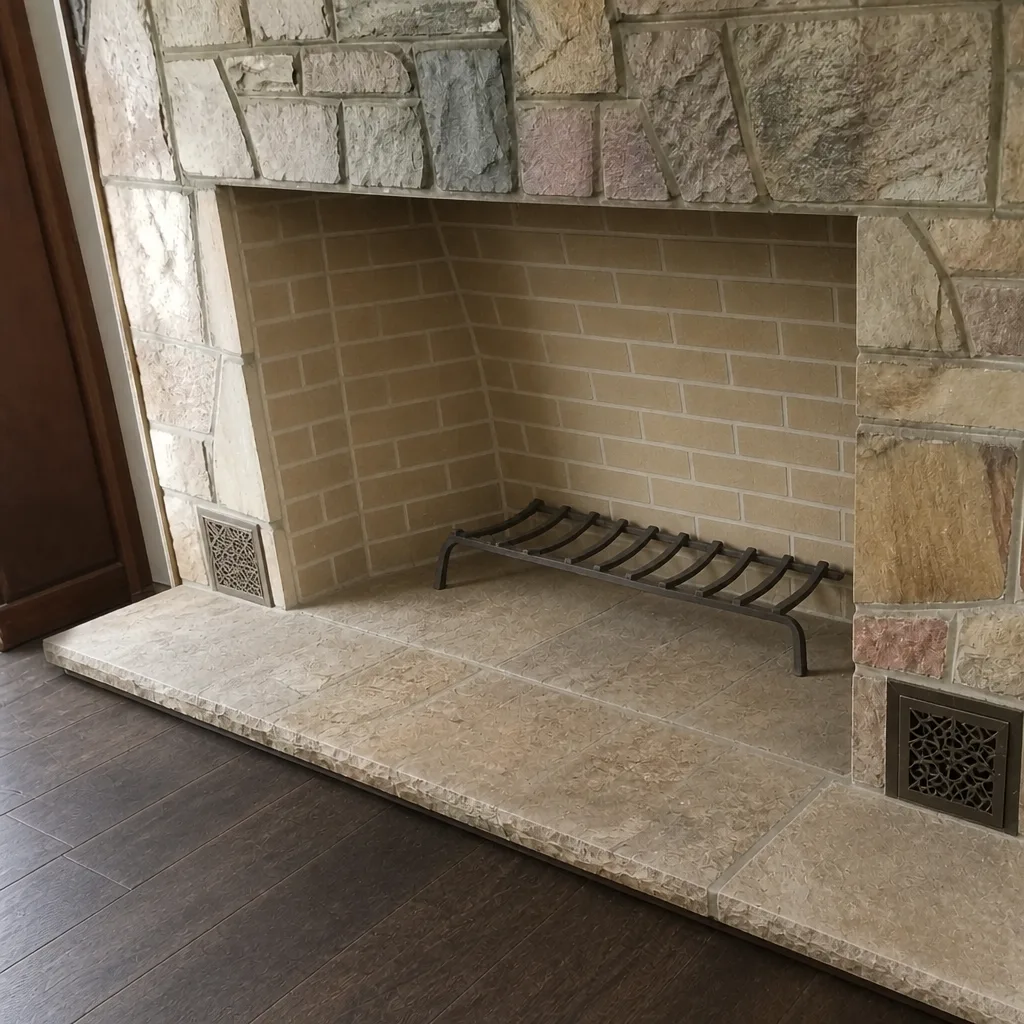
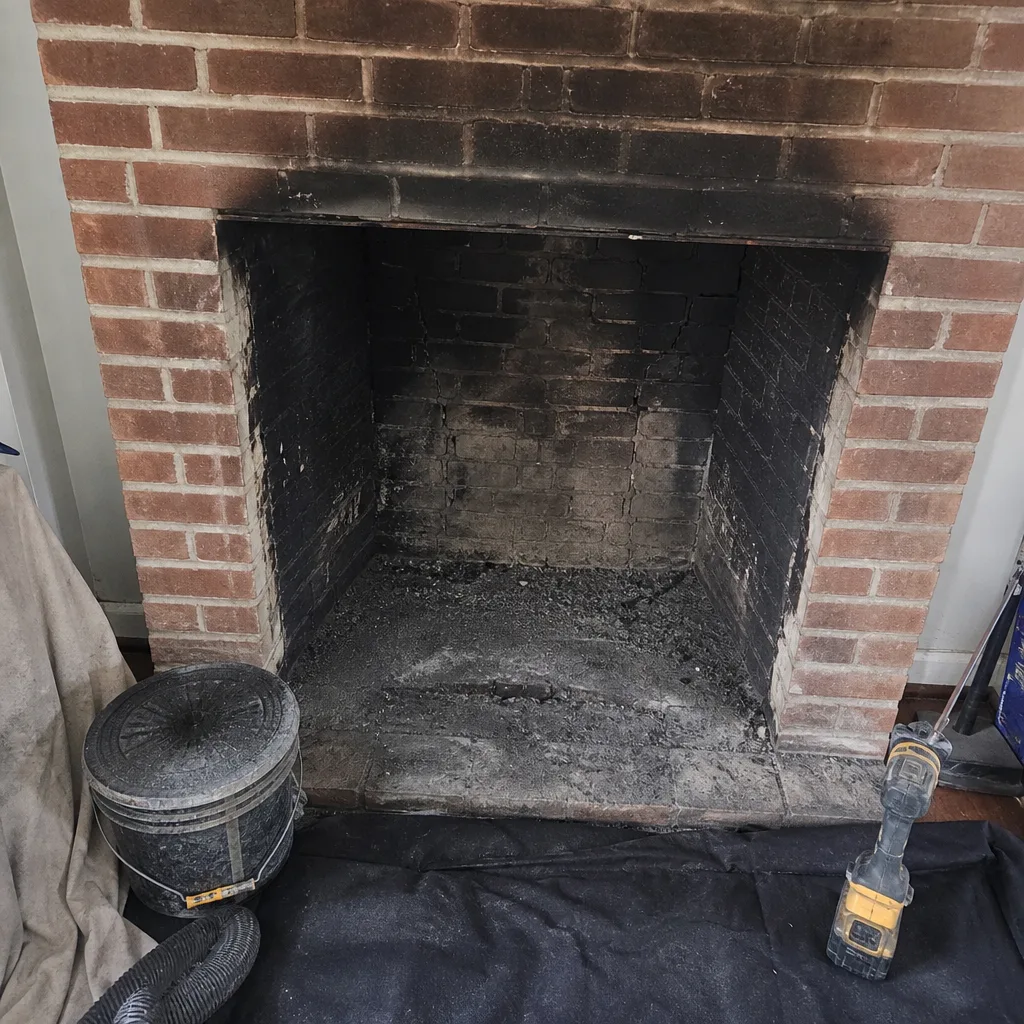
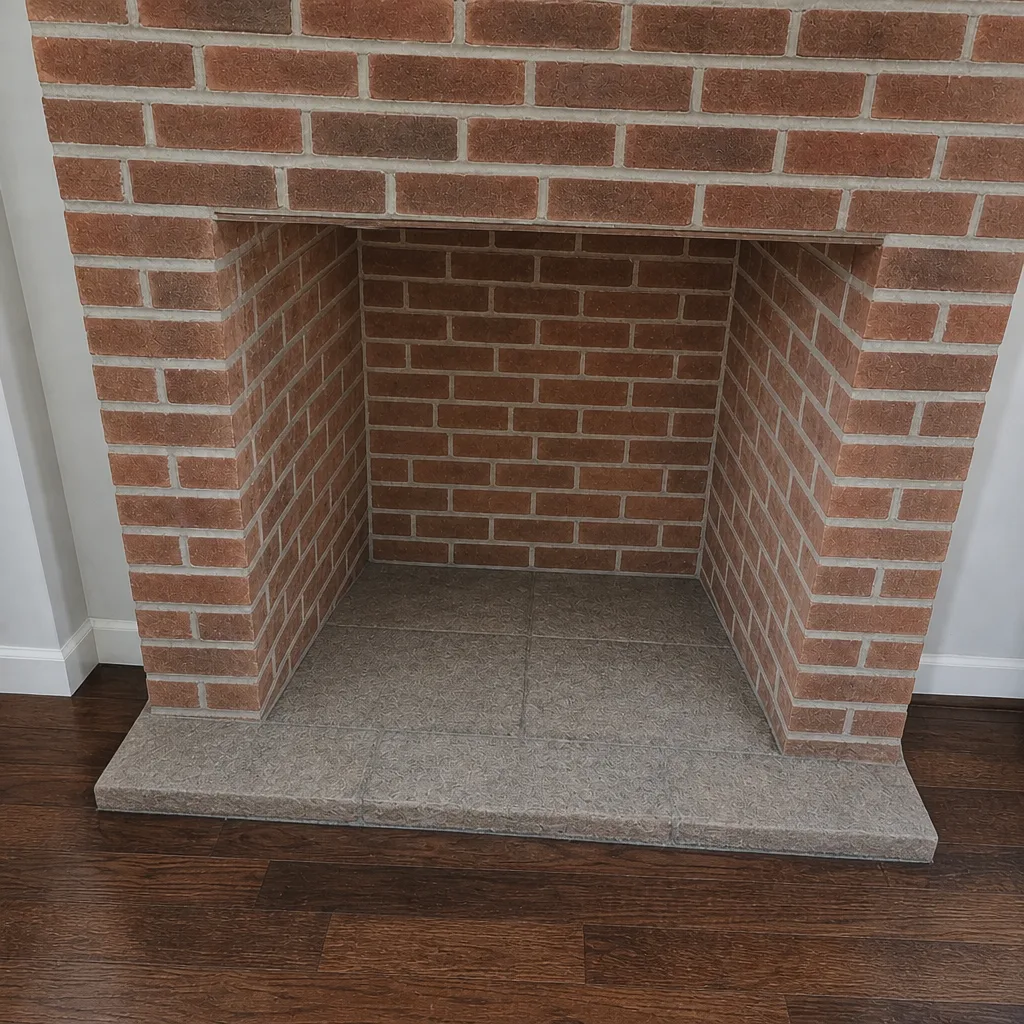
See the difference
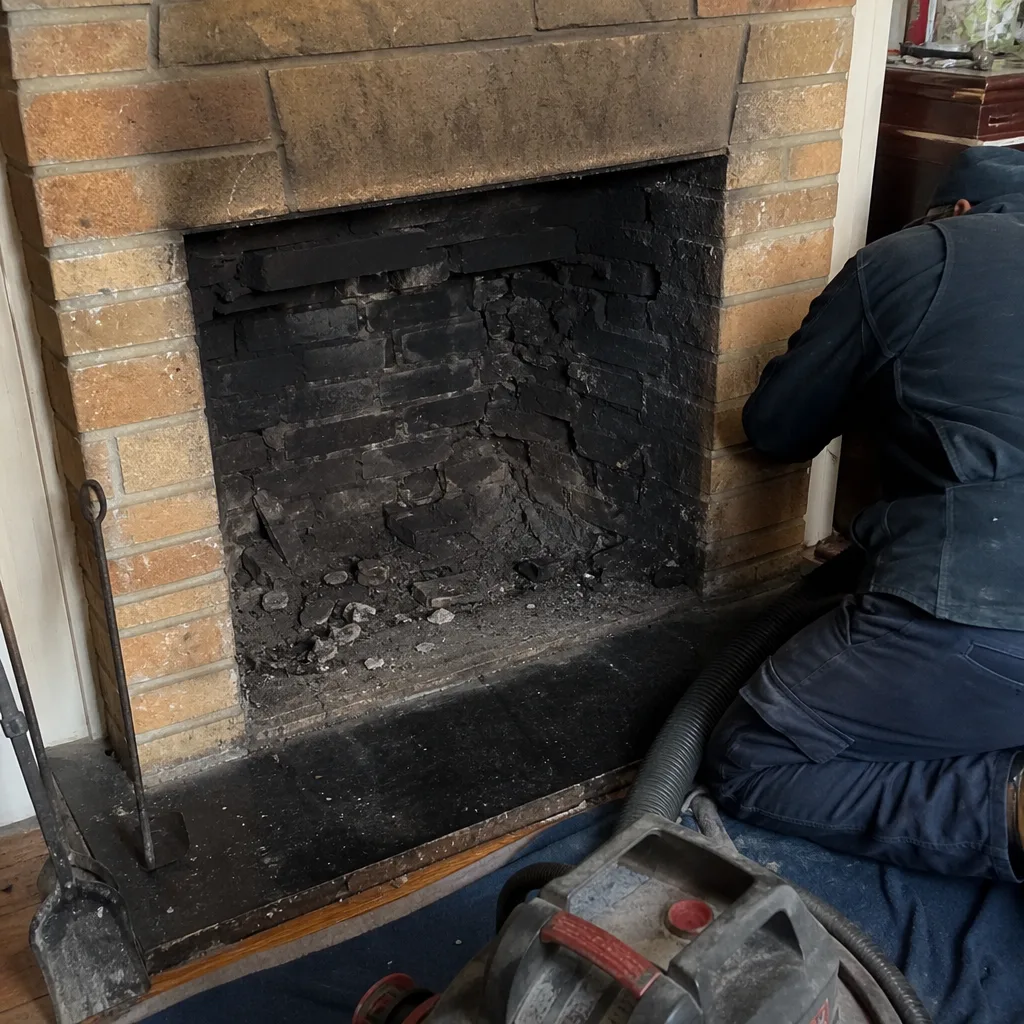 Before
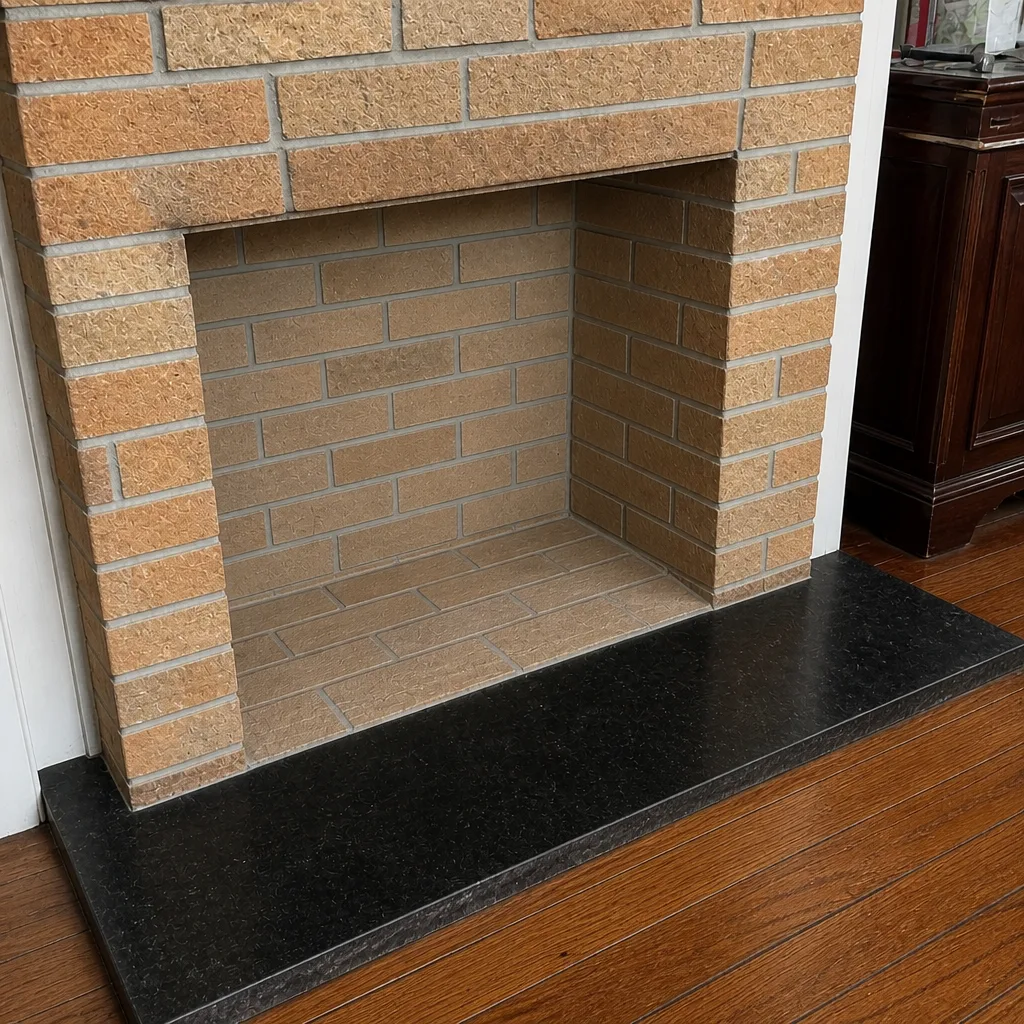 After
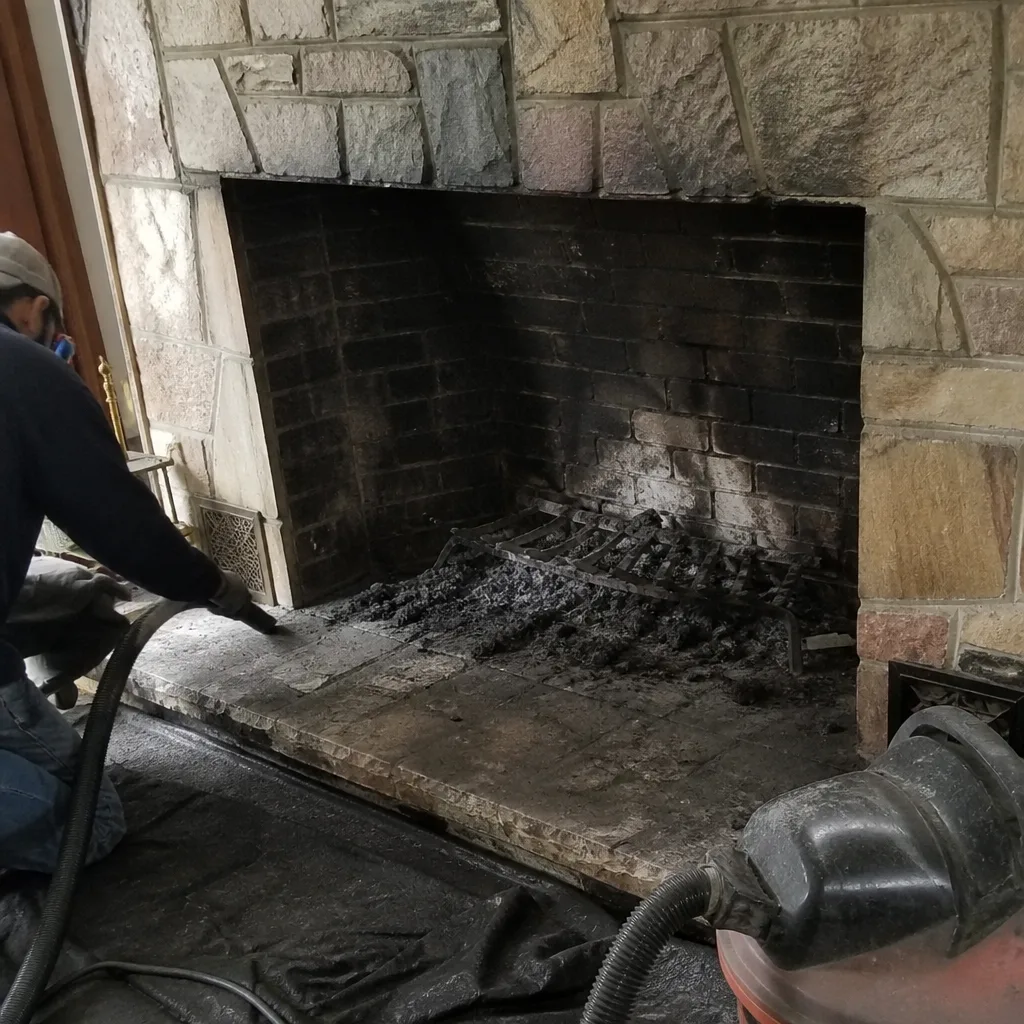 Before
 After
 Before
 After
When to Call a Professional
Call a professional after any fire event in the flue, no matter how small. Call after any CO alarm or any CO-like symptom pattern in the household. Call before the heating season starts if your last sweep or inspection is more than a year old. Call if you smell smoke in the house with the fireplace off, if the fire behaves differently than it used to, or if you see damage to the crown or cap from the ground. Call if a neighboring rowhouse has had a chimney issue and you share a party wall with that building. A professional inspection answers in one visit what a phone conversation can’t.
Chimney Sweep East Flatbush offers free estimates in East Flatbush – call (844) 932-2112. We answer 24/7. Fast dispatch from 7am to 7pm, Sunday through Friday.
Frequently Asked Questions
Evacuate everyone from the building and call 911. Close the damper only if you can reach it safely. Do not put water on the fire. Once the fire is out, the chimney is unusable until a Level 2 inspection confirms the liner is sound. Call (844) 932-2112 after the emergency if you need an inspection booked – estimates are free.
A chimney fire can transfer into an adjacent structure through a shared party wall within minutes, which is why alerting neighbors immediately is part of the response. Rowhouse construction means the wall between your building and the next is shared masonry that can conduct heat. Whether or not the fire actually spreads, the neighbor’s own smoke and CO detectors should be checked right away.
Yes, always. Even a fire that seemed minor can crack or score the liner, and a slow-burn flue fire often leaves no exterior signs at all. A Level 2 inspection uses a camera to see the interior of the flue – the only reliable check. Skipping it risks relighting a chimney with a compromised liner, which is how a small fire becomes a structural one.
Get everyone outside, then call 911 first – they can meter the CO levels in the building. If the source is a gas appliance, call Con Edison from outside the home. Once the emergency is handled, book a chimney inspection before relighting anything, because the gas company can check the appliance but not the interior of the flue.
Get the fire department incident number or report at the scene if you can, photograph everything before cleanup, keep all original photo files, and get a written inspection report and a written repair estimate before you file with your insurer. Pairing the inspection documentation with the claim is what keeps the process moving.
It can, yes – especially when the two units share a chimney stack. Heat and smoke can travel through shared masonry, and a slow-burn fire on one side can affect shared components. If a neighboring unit has had a chimney event and you share a wall, book an inspection even if your own fireplace was off. Call (844) 932-2112 for an estimate.
The Bottom Line
A chimney emergency in East Flatbush rowhouse country is not a solo event. Party walls, shared stacks, and the concentration of wood-burning fireplaces in the neighborhood mean the response has to account for the building next door. Evacuate, call 911, do not use water, and after the fire, do not relight until a Level 2 inspection is in writing. The rest is prevention: annual sweeps, a sweep before the season starts, working CO detectors, and documentation you can hand to an insurer without hunting for it. That stack of habits is what turns a chimney emergency from a structural event into a manageable repair. If you need an inspection, a sweep, or a repair plan after a fire, the fastest path is a phone call – the written report is what protects you from there.
To book a Chimney Sweep East Flatbush visit, start with a chimney sweep or a standalone inspection, or ask about chimney cap & crown work if the fire event included cap or crown damage. Call (844) 932-2112 for a free estimate. We answer 24/7. Fast dispatch, 7am-7pm.
Written by the team at Chimney Sweep East Flatbush.